The Quiet Room With Free Wi-Fi: Building a Calm-Down Plan Around Your Public Library
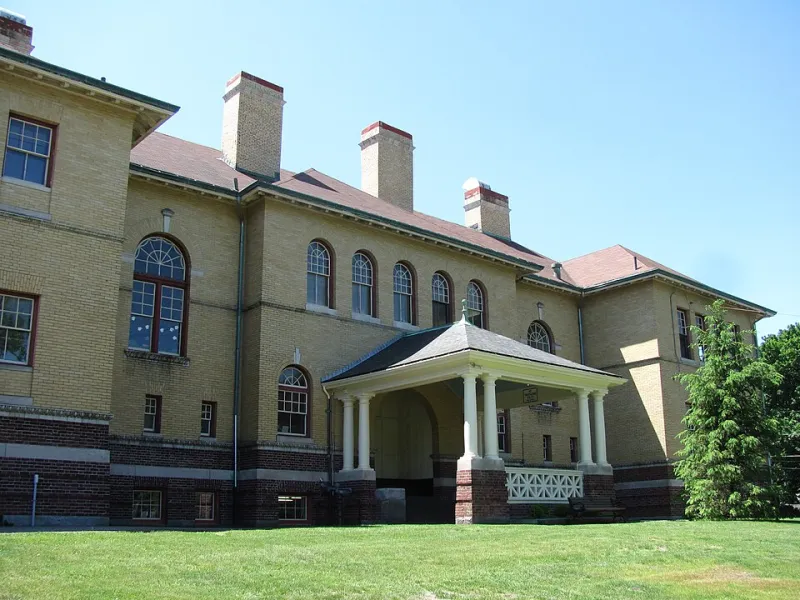
Photo: John Phelan, CC BY 3.0, via Wikimedia Commons
There is a particular kind of quiet that lives in a public library on a weekday afternoon. Not silence exactly—someone is turning pages, a toddler is negotiating with a puzzle, a printer is doing its thing—but quiet enough that your shoulders can come down a notch. In a season when a lot of us are walking around braced for the next alert, that quiet is not a luxury. It is infrastructure.
This is not a pitch to replace therapy with a library card. It is a case for adding your local branch to the short list of places your nervous system already knows how to use. Libraries exist in most US communities. They have hours, doors, bathrooms, Wi-Fi, and staff who are trained to help you find things, not to ask why you look tired. For readers of Collapse Psychology, that combination is worth taking seriously.
Why a library works when other places ask too much
Most public spaces come with a bill attached. A coffee shop expects a purchase. A gym expects a performance. A doctor’s office expects you to explain yourself. The library asks almost nothing. You can walk in, sit down, read for twenty minutes, use the restroom, and leave without a transaction or a story.
That matters for a nervous system that is already taxed. A predictable place with regular hours gives your body a small piece of evidence that the week has shape. The same door. The same smell of paper and floor cleaner. The same low hum. You do not have to be calm to enter. You just have to show up.
Libraries are also one of the last free climate-controlled refuges in many towns. During a heat wave, a cold snap, or a stretch of bad air, that is not a minor detail. It is practical resilience. And because libraries are usually designed for lingering—tables, chairs, outlets, water fountains—they make it possible to stay a while without looking like you are loitering.
A field guide to using your card as a nervous-system anchor
You do not need a grand plan. You need a repeatable loop. Here is one way to build it.
Scout the quiet zones first. Walk in without a task. Notice where the noise lives and where it does not. Find the reading room, the reference tables, the corner by the magazines. Pick one spot that feels tolerable on a normal day, not just a good day.
Set a twenty-minute loop. Same entrance, same chair, same exit. Twenty minutes is long enough to settle and short enough that you will actually do it. The point is not to read a whole book. The point is to teach your body that there is a place in town where nothing is required of you.
Give yourself a low-stakes reason to stay. Borrow a book you are mildly curious about. Use the computer to print something. Ask a librarian where the local history section is. A small task gives you permission to be there without pretending you came for a bigger reason.
Practice one low-stakes ask. Librarians are professional finders. Asking for a form, a password, or a section is a safe way to remember that most people will help you if you ask a clear question. That is a useful thing for an anxious brain to relearn.
Leave before you are depleted. The goal is not to prove you can endure a public space for three hours. The goal is to leave with a little more room in your chest than you came with. If you are fried, go. You can come back tomorrow.
Low-pressure social contact is already on the calendar
One of the quiet benefits of libraries is that they schedule contact for you. A book group. A craft hour. A lecture. A story time. A volunteer shift sorting donations or shelving returns. These are not forced friendships. They are structured, bounded, and easy to leave.
If you are trying to rebuild a sense of community without burning through your social battery, start with a program that has a clear start and end time. Sit near the edge. Say one sentence to one person. Something like, I am new here, what is this group usually like? That is enough. You are not trying to become the mayor of the branch. You are trying to become a familiar face.
Volunteer shifts can be especially useful because they give you a role. A role takes the pressure off small talk. You have a task, a time limit, and a reason to be in the room. For people who feel better when they are useful, that can be a gentler on-ramp than a purely social event.
Build a personal resilience plan around a place that already exists
You do not have to invent a new third place from scratch. Use the one that is already down the street. In your notes app, keep a small library plan:
- The address and hours of your closest branch.
- One backup branch, in case the first is closed or crowded.
- How you will get there—car, bus, bike, or a walk you can manage on a bad day.
- Your card number, or a note about how to get a card.
- One recurring program you could attend this month.
- One volunteer contact or staff name, if you have one.
- One exit line you can use without guilt: I have to head out, but this was nice.
This is not a crisis plan. It is a calm-day plan. The point is to make the library familiar before you need it, so that on a harder day it is not a strange building with unknown rules. It is the quiet room with free Wi-Fi.
The limits worth naming
A library is not an emergency shelter, a crisis line, or a therapist’s office. Staff are not trained to manage a mental-health emergency, and funding varies wildly from town to town. Some branches are loud, understaffed, or closed on the days you need them most. Use the library as one support among others, not as a substitute for care.
Still, the case is strong. In a culture that keeps asking us to buy our way into comfort, the library offers a different deal: come in, sit down, breathe, borrow something, leave. That is a small form of steadiness. And small forms of steadiness are how most of us get through uncertain times.