Your Body Didn't Get the Memo: Twelve Days After the Midterms

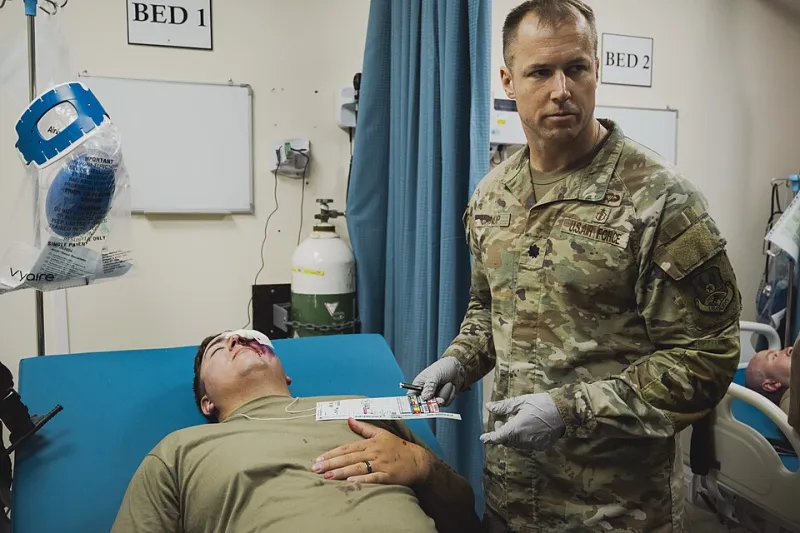
Photo: Shane T. McCoy, Public domain, via Wikimedia Commons
Twelve days ago you stood in a school gym or a library basement or a kitchen table with a ballot on it, and you did the thing. Then you waited. Then the numbers came in, some of them, in some places, and eventually the calendar flipped and the news moved on to the next shiny object.
Your shoulders did not move on.
If you're still waking up at 4:40 a.m. with your jaw locked, or you've noticed you're flinching at the sound of a phone buzzing on the counter, you're not broken and you're not secretly psychic. You're running a very ordinary piece of biology that happens to be badly matched to how elections actually end.
The News Cycle Has a Short Memory. Your Nervous System Doesn't.
For roughly six weeks, your environment told you that something enormous was at stake and that you should be paying attention constantly. Texts from unknown numbers. Ads that arrived like weather. A feed that refreshed into a fresh catastrophe every eleven seconds. That's a lot of small, repeated signals saying brace.
Here's the catch: the body responds to sustained alarm by raising the floor, not by spiking and dropping. It turns up the idle. And when the stimulus stops, it does not receive a formal notification. There's no all-clear siren, no ceremony, no one hands you a certificate that says you may now unclench.
So the arousal just kind of... sits there, looking for a job. Which is why the Tuesday after the Tuesday feels weirdly flat and also like you're about to be hit by a car.
Clinicians sometimes call this a stress-response hangover. You don't need the term. You just need to know the lag is normal and that it usually resolves over days to a few weeks, not hours.
Disappointment Has an Object. Dread Doesn't.
It's worth sorting out which one you're carrying, because they want different things from you.
Ordinary political disappointment is specific. It's about a race, a ballot measure, a city council seat. It has a shape. It comes with a recognizable grief — you can name what you lost, you can be annoyed at the people who voted the other way, and the feeling moves through you rather than parking. It tends to get a little lighter when you talk about it out loud.
Collapse dread is diffuse. It isn't about a race anymore; it's about the species. It has no edges. It arrives with a particular flavor of unreality — the sense that you're watching everything through glass — plus compulsive checking, sleep that fractures, and a running internal argument you can't win. Talking about it doesn't relieve it. It just generates more of itself.
One isn't more sophisticated than the other. They're just different animals. The first wants company and a little time. The second wants a nervous system that's been talked down off the roof.
And if your mind is currently producing confident forecasts about the next decade, file those under symptom, not analysis. A brain in threat mode is a terrible futurist. It overweights the worst case because that's the one it's built to rehearse.
Borrow Someone Else's Calm
The single fastest lever you have is other people. Human nervous systems regulate in proximity — a fact that's inconvenient if you're isolating and enormously useful if you're not.
This doesn't require a support group. It requires a body near your body, ideally doing something unremarkable:
- Six minutes of walking with a friend, phones in pockets, talking about their kitchen renovation.
- A diner booth. Diners are load-bearing infrastructure for a certain kind of American worry.
- A dog. A cat. A horse, if you're lucky enough to have access to one.
- A choir, a pickup game, a class where you have to count out loud.
The key is that the first five minutes don't have to be about the thing. Co-regulation mostly happens in the boring part.
Put a Fence Around the Feed
There's a difference between information and rumination wearing an information hat. Information changes what you do. Rumination changes what you feel, repeatedly, on a loop.
A few fences that hold up:
- Two windows a day. Pick a time (say, noon and 7 p.m.), check for however long you said you would, then close the tab. Not perfect. Better than ambient.
- No phone in the first twenty minutes. Cortisol is already high in the morning; don't hand it a megaphone.
- Mute, don't leave. You can mute a group chat for a workday without making a speech about it.
- One source you trust more than you like.
If you notice yourself reading the same article in three different outfits, that's the tell.
Three Scripts for the Rooms You'll Be In
Thanksgiving is in two weeks. Workplace small talk is happening now. Here's some scaffolding.
The family group chat
"Hey all — I'm going to step back from the political threads for a bit. Not mad at anyone, just need my brain back. Text me directly if something actually happens. Love you."
The coworker who wants to relitigate at the standup
"I've got feelings about it too, but I'm trying to keep this half hour for work. Want to grab coffee after and complain properly?"
You are not shutting them down. You're giving the conversation a container.
The friend who's still in it and you're not
"I know you're still carrying this hard. I don't have the bandwidth to go deep today, but I can absolutely bring dinner Thursday. Tell me what you need."
Specific, bounded, warm. That's the shape.
Grief With No Funeral
Some of what's hanging around isn't anxiety at all. It's mourning — for a version of the country you thought you were living in, or a future you'd already started furnishing in your head.
That grief doesn't get a service. There's no card, no casserole, no one saying I'm so sorry for your loss at the mailbox. So it goes underground and comes back out as irritability at the dog.
You can give it a small ceremony. Write the thing down — the future you were picturing — and read it to one person you trust. Not to solve it. To let it be witnessed, which is most of what mourning is anyway.
When to Ask for More Than a Walk
If it's been more than two or three weeks and you're still not sleeping, not eating well, drinking more than you meant to, panicking in the car, or unable to do your job, that's your cue to bring in a human with training. A therapist, your doctor, or 988 if you're in a dark place — that line is free, confidential, and available around the clock in the US.
Asking early isn't dramatic. It's just good maintenance.
The Slow Part
The election is administratively over and emotionally unfinished, and those two things can be true at once for a while. You don't have to force the second one to catch up.
Steady ground, for now, is going to be small and repeated: the walk, the window, the diner, the fence around the feed. None of it is a solution to anything large. All of it is how a body remembers that the alarm was about an event, and the event is done.