What to Say When Your Kid Asks If the World Is Ending
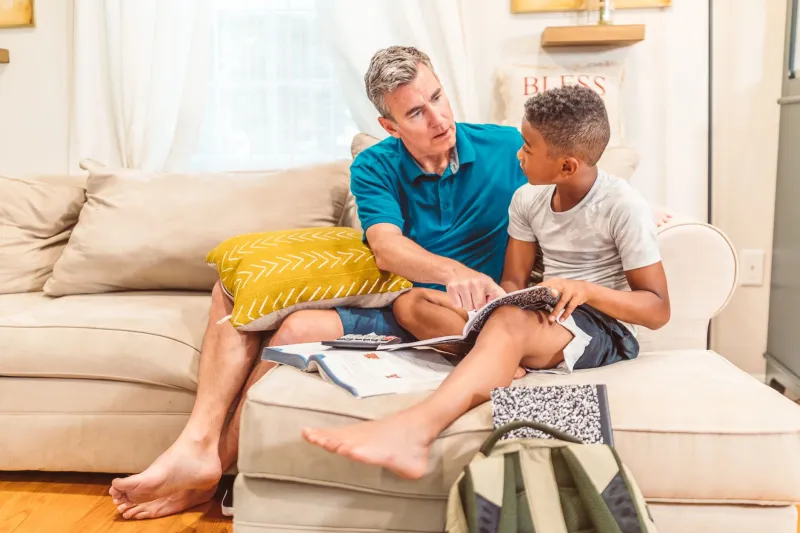
Kids are excellent eavesdroppers. They hear the half-conversation at the kitchen table, the sigh before the news switches off, the way you say “we’ll see” when what you mean is “I’m scared.” They don’t need a formal briefing on societal uncertainty to know something is wobbling. What they need is a grown-up who can be honest without making them carry the whole weather system.
That’s the narrow path here: no false reassurance, no adult fear dump. Developmental psychology gives us a useful map. Young children need safety and routine. Elementary-age kids need facts they can handle. Teens need respect for their radar and room to form their own views. The goal is not to answer every question perfectly. It’s to keep the door open and keep them grounded in the present.
Start With Your Own Weather Report
Before you explain the world, check your own nervous system. Kids read tone faster than content. If you’re spiraling, you’re more likely to either overpromise (“Nothing bad will ever happen”) or overshare (“Honestly, I don’t know how much longer any of this holds”).
A simple opener helps: “I’m going to answer honestly. I’ll tell you what I know, what I don’t know, and what we can do together.” That sentence does a lot of work. It signals truthfulness, sets a boundary, and points toward agency.
Ages 3–7: Safety Is the Headline
Preschoolers and early elementary kids don’t need systemic analysis. They need concrete safety, routines, and short answers. If they ask why the sky was orange or why you were glued to the news, keep it simple: “There was a big fire far away, and firefighters are working on it. We are safe here. If you feel worried, come find me.”
Don’t volunteer scary details they didn’t ask for. Don’t use sarcasm or vague dread. And don’t treat their worry as silly. A useful script: “That sounds scary. You’re safe right now, and I’m glad you told me.” Then go back to the routine: dinner, bath, book. Repetition is the point.
Ages 8–11: Facts With Handles
Kids this age want to understand how things work. They can handle more nuance, but they still need boundaries. Give them a fact, a feeling, and an action. For example: “Some places are dealing with more severe weather, and scientists are studying it. It worries me too sometimes. One thing we can do is make sure our family has a plan for storms and check on our neighbors.”
If they repeat something wild from a video or a playground rumor, correct it without shaming them. “I heard that too. Here’s what I actually know.” Then ask what they think. This is where media literacy starts — not with a lecture, but with “Who made this? What are they trying to make you feel?”
Ages 12–18: Respect Their Radar
Teens often know more than adults give them credit for. They’ve seen the headlines, the group chats, the climate reports, the election coverage. Dismissing them with “Don’t worry about it” is a fast way to lose credibility. So is treating them as your therapist.
Try: “You’re not imagining it. There are real problems. I don’t have all the answers, and I’m not going to pretend I do. What I do know is that you don’t have to solve this alone, and you don’t have to fix it today.” Then ask what they’re seeing and what they wish adults understood. Listen longer than feels comfortable.
Teens also need help separating worry from rumination. A question like “Is this something you can act on, or is this a loop?” can be more useful than reassurance. If they want to act, help them find a contained version: a local group, a school project, a letter, a volunteer shift. Agency is an antidote to helplessness, but it shouldn’t become another full-time job.
Scripts for the Questions That Sting
“Are we going to be okay?” Don’t promise a specific outcome. Try: “I don’t know exactly what the future looks like. I do know we’ll keep taking care of each other and making a plan. You’re not alone with this.”
“Why aren’t adults doing more?” Validate the frustration. “A lot of adults are scared and disagree about what to do. That’s not fair to you. You’re allowed to be angry about it.”
“Is it bad to bring kids into this world?” This one deserves honesty and care. “I understand why people ask that. I’m glad you’re here. I don’t think the future is only one thing — there’s a lot of pain, and there’s also a lot of people trying to make things better.”
“Will there be school tomorrow?” Keep it concrete. “Yes. School is happening. If something changes, I’ll tell you.”
Protect Agency Without Faking Control
Kids don’t need a fantasy where everything turns out fine. They need evidence that hard things can be handled together. That can look small: a family emergency kit, a neighborhood check-in, a garden, a letter to a local official, a monthly call to a grandparent. Small actions teach a big lesson: uncertainty is real, and we are not powerless inside it.
Also protect their attention. If the news is on all day, they’re marinating in adult anxiety. You can say, “I’m going to read this later. Right now we’re doing homework.” That’s not avoidance. It’s containment.
Keep the Door Open
This isn’t a one-time talk. It’s a series of small check-ins, ideally while doing something else — driving, dishes, walking the dog. If your child seems persistently anxious, can’t sleep, avoids school, or spirals for weeks, bring in a pediatrician or a child therapist. That’s not overreacting. That’s using the tools we have.
The world can be scary and still hold room for a kid to be a kid. Our job isn’t to lie about the weather. It’s to teach them how to read it, dress for it, and come home to people who are glad they’re here.