Pass the Mashed Potatoes, Not the Manifesto: A Thanksgiving 2026 Guide for Anxious Families
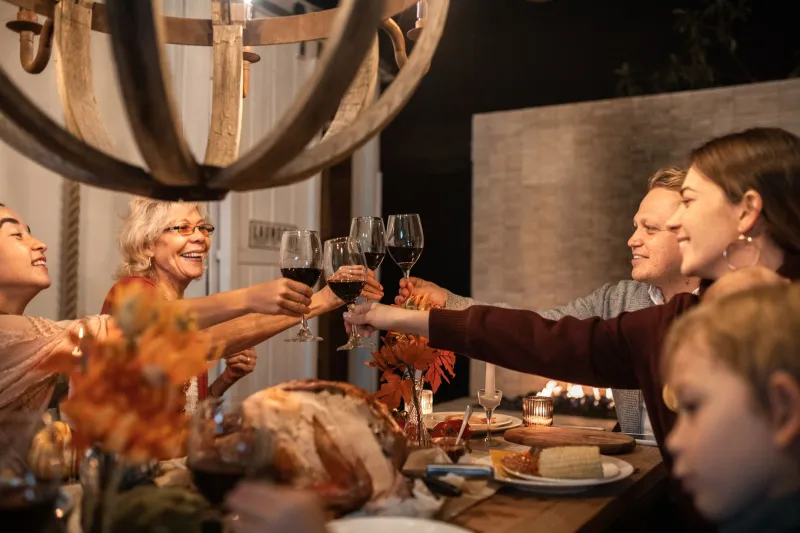
Thanksgiving 2026 is almost here, which means many of us are about to sit down with relatives who love us and also know exactly which buttons to push. If you spend your ordinary days tracking headlines, climate reports, or political dread, the holiday table can feel less like a meal and more like a panel discussion where everyone brought a grudge. Here is the useful reframe: you are not the host of a debate show. You are a person trying to get through dinner with your nervous system and your relationships mostly intact.
Pick a purpose before you pick a fight
Before you walk in, choose one sentence to carry in your pocket. Something like: 'My job today is to stay curious, not to correct.' This is not about being fake or swallowing your values. It is about remembering that your aunt is not a policy paper and your cousin is not a comment section. They are people you may want to know after this meal is over.
It also helps to identify one relative you genuinely want to check in with. Maybe it is the cousin who also seems tired of the noise, or the uncle who tells good stories about the old neighborhood. Decide how long you will stay. Two hours of real presence beats five hours of gritted teeth. If you are hosting, give yourself permission to step into the kitchen or onto the porch for a few minutes without announcing it like a summit.
A fifteen-minute pre-gathering plan
Nervous-system prep is not dramatic. It is practical. Eat something with protein before you go, even if dinner is at three. Drink water. Go easy on alcohol and caffeine if you know they make your jaw tighter. Drive yourself if you can, or at least know how you will leave. Set up a buddy text with a friend who is not at the gathering. Agree on a code word with your partner or a sibling: 'Can you help me with the car' can mean 'I need out of this conversation now.'
In the car before you walk in, take three slow breaths. Name three things you can see. Unclench your jaw. Pick two neutral topics: local sports, pie, dogs, a show you are watching, a recipe. This is not fake cheer. It is giving conversation somewhere to land besides the end of the world. Choose one topic you will not bring up first. You can answer if asked, but you do not have to open the door.
Scripts for boundaries that do not sound like a TED talk
Keep it short, warm, and repeatable. The goal is not a perfect line. It is a door you can close gently.
When someone says you are being dramatic: 'I hear that. I am not going to debate it at dinner, but I am glad you told me what you think.' Then ask about something else. 'How is the new job?' The pivot is not avoidance. It is pacing.
When a relative tries to bait you: 'I love you, and I am not doing this over stuffing. Tell me about your garden.' Or: 'That is a big topic. I do not have the bandwidth for it today. I do want to hear how you are doing.'
When you need to stop: 'I am going to step out of this conversation now.' No debate about whether you are allowed. You can add: 'I want to keep this visit pleasant.'
When someone asks if you think the world is ending: 'I do not think it is ending tomorrow. I do think things are changing fast, and I am trying to be honest about that without turning Thanksgiving into a lecture.' That leaves room for both worry and relationship.
Persuasion is not a holiday activity
Persuasion needs bandwidth, trust, and a willing listener. A holiday table often has none of those. It has loud rooms, old roles, and maybe wine. If someone is asking a real question, answer briefly. If they are collecting evidence for a fight, you do not have to supply it. Ask yourself: is this person curious or combat-ready? If you cannot tell, assume combat and keep it short.
You are allowed to plant a seed and walk away. 'I would be happy to talk about this another time, just not over pie' is a complete sentence. It keeps the door open without inviting a siege. You do not have to win the argument to keep the relationship. Sometimes the most radical move is refusing to treat your family like a project.
Make room for shared grief
A lot of holiday conflict is grief wearing a bad costume. People are scared about different things, and fear often comes out as certainty or sarcasm. You do not have to agree with someone's facts to honor their feeling. Try: 'That sounds exhausting. What worries you most?' Then listen for thirty seconds without correcting. You might learn something. You might also find that your uncle is not a monster, just a tired guy who watches too much news.
Share one true thing about your own worry, not a flood. 'I get scared too. I just try to keep it in proportion.' Let silence do some work. Shared grief does not require a shared spreadsheet of predictions. It requires enough room for two people to admit they are not okay without one of them turning it into a lecture.
After the plates are cleared
On the drive home, do not replay the argument in your head like a tennis match. Ask: what worked? Where did I feel my jaw tighten? Who did I actually connect with? Send one text to your buddy: 'Made it. Pie was good. Only one climate comment.' If you snapped, repair later. 'I am sorry I got sharp. I care about you. I just cannot do that conversation at dinner.' Repair is not surrender. It is maintenance.
Thanksgiving 2026 does not have to fix your family's politics or cure anyone's doom. It can be a small proof that you can be in the same room with disagreement and still pass the mashed potatoes. That is not naive. It is practice. Keep the door open. Keep your nervous system close. And if the conversation goes sideways, you can always say: 'I am glad we are here. Let us talk about something else.' Then do.